

Bra Too Tight, Too Loose, or Riding Up? A 5-Minute Bra Fit Check to See If You’re Wearing the Wrong Size
If your bra feels too tight, too loose, keeps riding up, leaves gaps in the cups, or has straps that never stay put, the problem usually is not your body. Most of the time, it is a mismatch between band, cup, and strap balance. A bra that feels uncomfortable is not always “bad quality” either. It is often the wrong size, the wrong shape, or a style that is asking one part of the bra to do another part’s job. The good news is that you can spot the problem in a few minutes.
A bra that feels too tight, too loose, or rides up in the back is usually a sizing problem, not a “you problem.” In most cases, the band is too big or too small, the cup is mismatched, or the straps are trying to compensate for poor band fit.
One of the biggest myths to forget: tighter does not automatically mean more support.
The fastest way to tell what’s wrong: symptom → cause → fix
If you only remember one section from this article, make it this one. Most fit problems become much easier once you stop asking, “Why is this bra annoying?” and start asking, “Which part of the bra is failing?”
| Symptom | Likely cause | What to try |
|---|---|---|
| Band feels painfully tight | Band too small, cup too small, or low-stretch style | Recheck underbust, try one band up or a sister size |
| Band rides up in the back | Band too loose, not enough anchor | Go down a band and up a cup if needed |
| Cup gaping or empty space | Cup too big, wrong cup shape, straps too loose | Tighten straps slightly, reassess cup size and style shape |
| Shoulder straps keep falling | Band too loose, straps too wide-set, or straps worn out | Fix band first, then adjust strap length |
| Side bulging or pressure marks | Band too tight, cup too small, or side coverage mismatch | Try a larger cup, a smoother side panel, or a softer wireless shape |
| Redness, friction, or skin soreness | Tight fit, rubbing, trapped moisture, or worn fabric | Stop wearing that bra, let skin recover, re-measure before rewearing |
Before you change styles at random, it helps to understand your size language first. Start here: first learn how bra sizes convert.
A bra that feels too tight usually comes from one of these 3 reasons
1. The band really is too small
This is the most obvious case. If the band digs in immediately, feels restrictive even on the loosest comfortable setting, or leaves deep marks quickly, your band may simply be too small for your underbust.
2. The cup is too small, so the band feels tighter than it is
This is the fit trap many people miss. If the cups are too small, breast tissue gets pushed outward or downward, which can make the whole bra feel tighter around the body. In that situation, moving to a bigger band alone may not fix the real problem.
3. The style is structurally firm for your body or daily routine
Some bras feel technically “correct” on paper but still feel wrong after several hours. If you sit for long periods, swell slightly during the day, are sensitive to seams, or dislike pressure at the ribcage, a firmer band or more rigid structure may start to feel like tightness even if the number is close.
More support does not come from making the bra painfully tight. A supportive bra should feel secure, level, and stable—not like it is compressing your ribcage all day.
Some shoppers ask, “Can a bra that’s too tight make breathing feel difficult?” A bra that feels restrictive can certainly feel uncomfortable enough that you want to take it off, but persistent shortness of breath, chest tightness, or chest pain should not be brushed off as “just the bra.” If that feeling continues after loosening or removing the bra, stop wearing it and seek medical advice promptly.
The same goes for pressure pain, ongoing soreness, under-bust rash, or friction redness. If your skin is being rubbed raw or staying damp under the bust, the bra fit and fabric environment may be part of the problem. Do not keep forcing the same bra just because it is your “usual size.”
A bra that feels too loose or keeps riding up usually comes from these 3 reasons
1. The band is too big
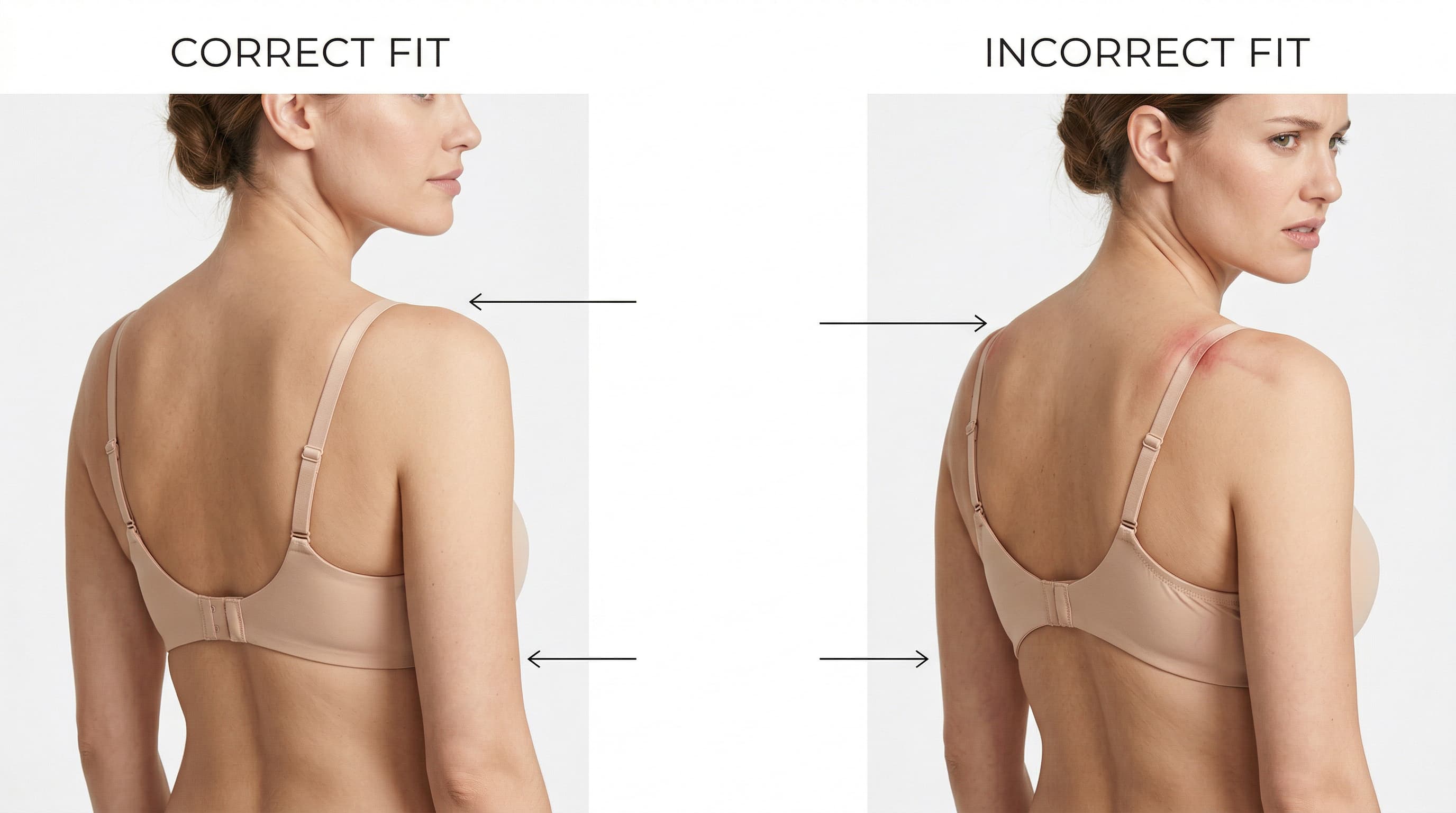
If the back of the bra climbs upward, the band is usually not anchoring properly. This is one of the clearest signs of an oversized band. When the front weight is not being held firmly enough, the back gets pulled up.
2. The straps are doing too much work
A common reaction to a loose-feeling bra is to tighten the straps again and again. But straps are not supposed to carry the main support. If they are constantly slipping or digging while the bra still feels unstable, the band is often the real issue.
3. The cup shape does not match your bust shape
Empty space in the cup does not always mean the cup is “too big.” Sometimes the cup is the wrong shape for your fullness, root width, or upper bust profile. That mismatch can make the bra feel loose even when the labeled size looks reasonable.
If your bra keeps riding up, that is usually a better clue than the cup letter. It tells you the bra is not sitting level and stable around the body. Support starts at the band. When the band fails, everything else starts compensating.
If you still feel confused by labels like 80B, 34/75, or 70C while troubleshooting discomfort, read 80B and 34/75: what these sizes really mean.
Your 5-minute self-check at home
You do not need a fitting room to learn a lot. These five quick checks can usually tell you where the problem starts.
Check 1: Is the band level?
Look at the bra from the side or in a mirror. The band should stay roughly parallel to the floor. If it rises in the back, it is often too loose.
Check 2: Are the cups lying smoothly?
Wrinkling, gaping, or empty space can point to a cup mismatch or a shape mismatch. Cutting in or overflow can point to cups that are too small.
Check 3: Are the straps helping or rescuing?
If loosening the straps makes the bra fall apart, the band is not doing enough. If tightening them creates shoulder pain but not real support, the fit balance is off.
Check 4: Can you wear it for more than 10 minutes without noticing it constantly?
A good everyday bra should not dominate your attention. If you keep pulling, adjusting, lifting, or re-settling it, something is wrong.
Check 5: What happens after you take it off?
Light marks can be normal, but lasting pain, rubbing, rash, or strong relief the moment you remove it usually means this bra is not your right everyday fit.
How to correct the size instead of just tolerating the discomfort
Once you know the symptom pattern, the next step is not guessing randomly. It is correcting the size in a logical order.
- Fix the band first. If it rides up, start there. If it digs painfully, start there.
- Then recheck the cup. A band change often changes which cup letter you need.
- Then adjust the strap. Straps fine-tune. They should not be the main solution.
- Then reassess the style. A correct size in the wrong construction can still feel wrong.
A useful rule is sister sizing. If the band is too tight but the cup feels mostly okay, go up one band and down one cup. If the band is too loose but the cup feels mostly okay, go down one band and up one cup.
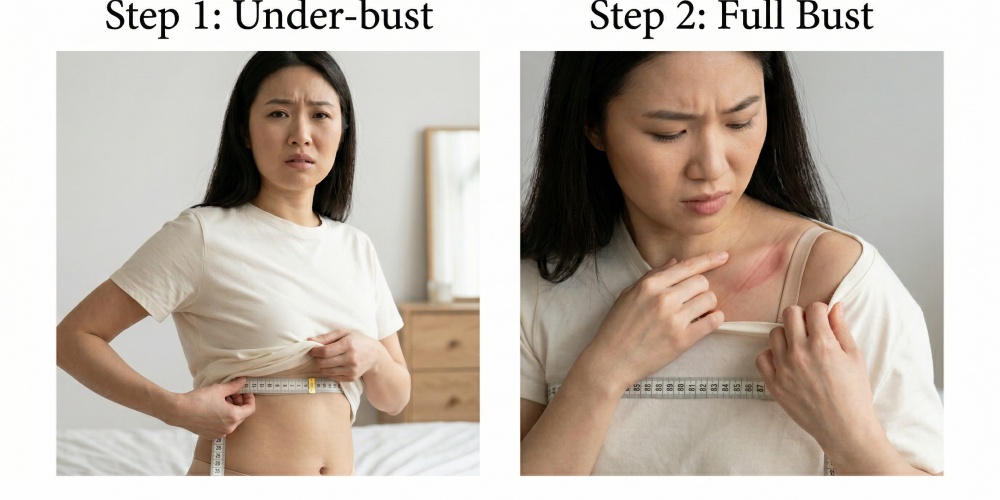
If the bra is uncomfortable enough that you dread wearing it, do not wait until it becomes your “normal.” Re-measure. VEIMIA’s official size guide recommends using both underbust and overbust measurements, with overbust measured while leaning the upper body forward about 45 degrees and underbust measured standing upright and level.
Brand-safe advice worth following: if you have ongoing chest pressure, repeated pain, friction rash, or skin redness that keeps returning, stop wearing that bra and re-measure before buying the next one.
You can also use the official VEIMIA Size Guide to recheck your starting size before changing styles.
A softer fix when your main issue is “I hate feeling squeezed”
Sometimes the problem is not just the number. It is the whole wearing experience: the band shifts, the side pressure builds up, the bra feels fine for one hour and annoying for six. In those cases, a softer, more stable wireless construction can work better than forcing yourself into a style that looks supportive but feels hostile on the body.
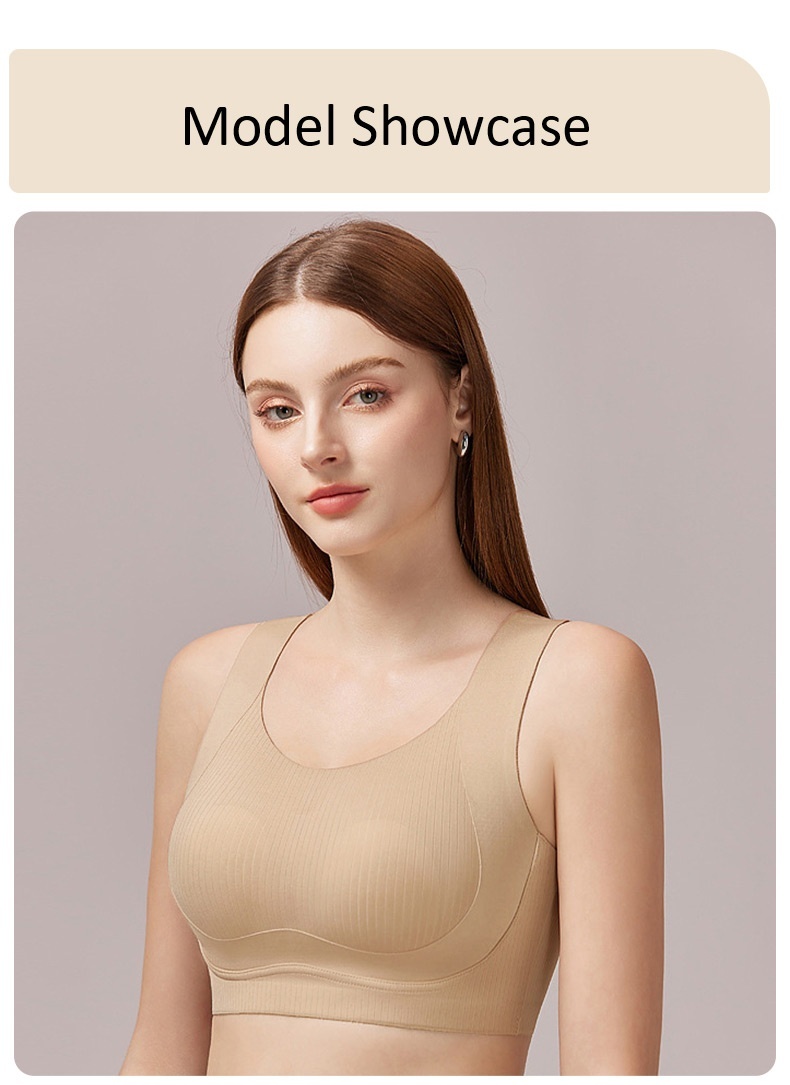
Comfortable Wireless Cami Bra
Best for those who dislike feeling trapped by their bra and want more stable everyday coverage.
- Good fit direction for people who feel band pressure, side compression, or all-day discomfort
- Official page highlights a wireless, one-piece design for daily, working, and sleeping
- Works especially well when you want stable coverage without a hard, fussy feel
- Current SG site price: S$39.00
This is the kind of bra that makes sense when your complaint is not “I need more push-up,” but “I need to stop adjusting my bra all day.” It is also a better conversation to have than simply buying tighter and tighter bands in the hope that discomfort will somehow turn into support.
If your current bras have also become older, looser, or more unstable over time, read how often you should replace and wash bras.
Final takeaway
If your bra feels too tight, too loose, keeps riding up, leaves empty cups, or makes your straps misbehave, the answer is usually not to “put up with it.” It is to identify which part of the fit is off.
- Too tight can mean the band is too small, but it can also mean the cups are too small
- Too loose often starts with a band that is too big
- Riding up usually means the band is not anchoring properly
- Gaping cups are not always “too big”; shape mismatch matters too
- Support should feel secure, not punishing
The best fix is usually simple: check the band, check the cup, re-measure, and choose a style that supports you without making you count the minutes until you can take it off.
For a softer browse after sizing, you can also view VEIMIA Best Selling.
FAQ
How can I tell if my bra is too big, too tight, or too small?
Look at the band first. If it rides up, it is often too loose. If it feels restrictive, digs in, or causes pressure, it may be too tight. If the cups gape, cut in, or wrinkle, your cup size or cup shape may be wrong.
What should I do if my bra feels too tight?
Do not just suffer through it. Check whether the band is too small, whether the cups are too small, and whether the style is too rigid for your daily wear. Re-measure before buying again.
Can wearing a bra that is too tight cause breathing difficulty?
A bra that feels overly restrictive can feel very uncomfortable, but ongoing shortness of breath, chest tightness, or chest pain should not be ignored. Remove the bra and seek medical advice if symptoms persist.
Why does my bra keep riding up in the back?
Most often, the band is too loose and is being pulled upward instead of anchoring around the ribcage. The fix is usually to correct the band size, not just tighten the straps.
What causes empty cups or cup gaping?
The cup may be too big, but it can also be the wrong shape for your bust. Shallow cups, tall cups, or styles that do not match your fullness pattern can all create gaps.
Why do my bra straps keep falling off?
This often happens when the band is too loose, the straps are too wide-set for your shoulders, or the straps have stretched out. Fixing band stability usually helps more than over-tightening the straps.
When should I stop wearing a bra and re-measure?
If you have repeated pressure pain, skin rubbing, under-bust redness, obvious riding up, or constant discomfort that makes you adjust the bra all day, stop forcing that fit and re-measure first.
Meta Descriptions
Meta 1: Why does your bra feel too tight, too loose, or ride up? Learn the 5-minute fit check that helps you spot band, cup, and strap problems fast.
Meta 2: Fix bra discomfort with a clearer fit check. See why bras ride up, gape, or feel too tight, then find a more stable and comfortable solution.
Meta 3: Symptoms, causes, fixes: bra too tight, bra too loose, riding-up band, empty cups, falling straps, and when to re-measure before buying again.