


Understanding the basics of bra sizing
When you see a bra size like 34B, 36C, 75A, or 80D, it is made up of two parts: a number and a letter.
The number is the band size — the measurement around your ribcage, under the bust.
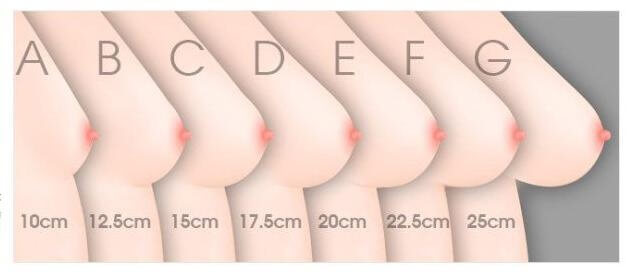
The letter is the cup size — the difference between your bust measurement and your underbust measurement.
Together, they determine how the bra feels, supports, and shapes. A 34B is not just “34” and not just “B” — it is the relationship of both.
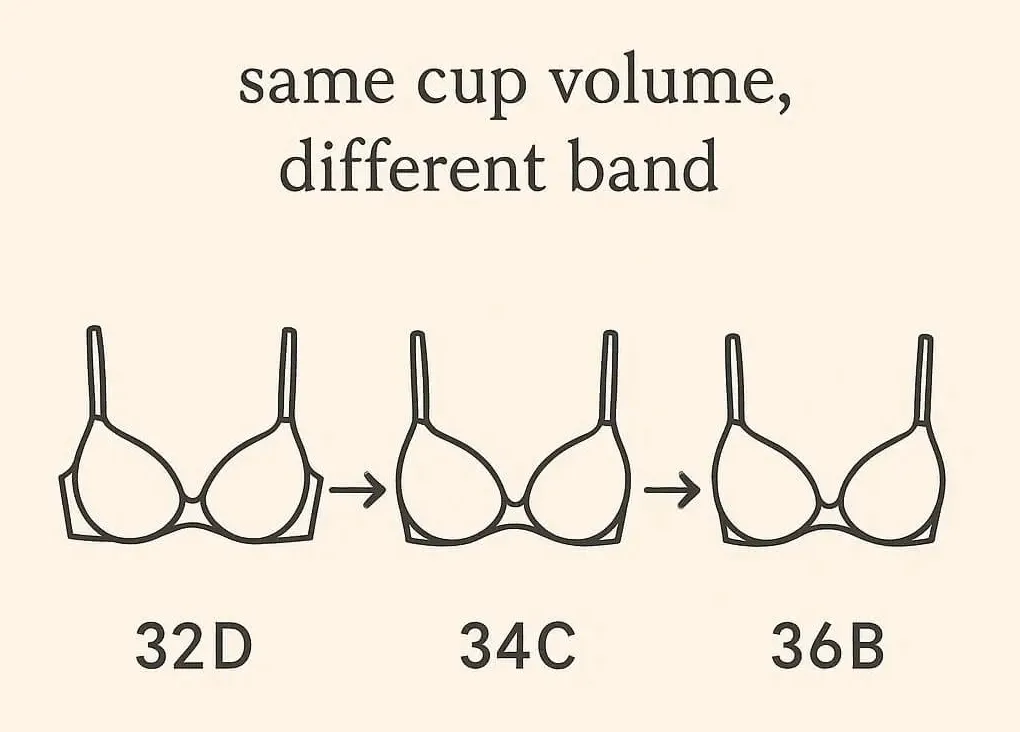
This is also why two bras with the same cup letter can still feel very different. A D cup on a 34 band is not the same overall volume as a D cup on a 38 band. And because of sister sizes, one size can feel surprisingly close to another size with a different number-letter pairing.
How to measure your bra size at home
Getting your size right starts with two measurements. You do not need a fitting room — just a soft measuring tape and a few minutes.
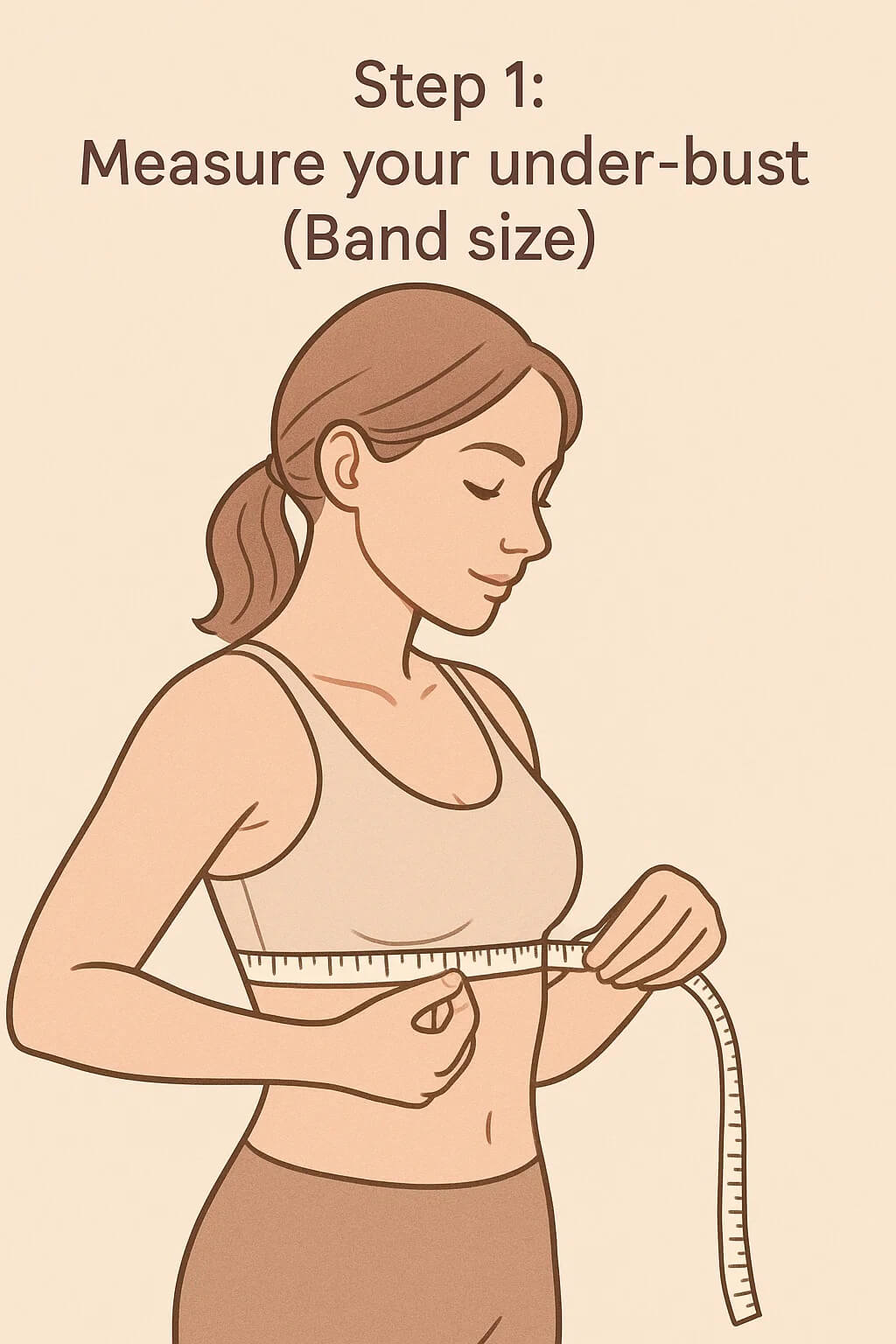
- Measure your underbust. Wrap the tape snugly around your ribcage directly under the bust. Keep it level and straight.
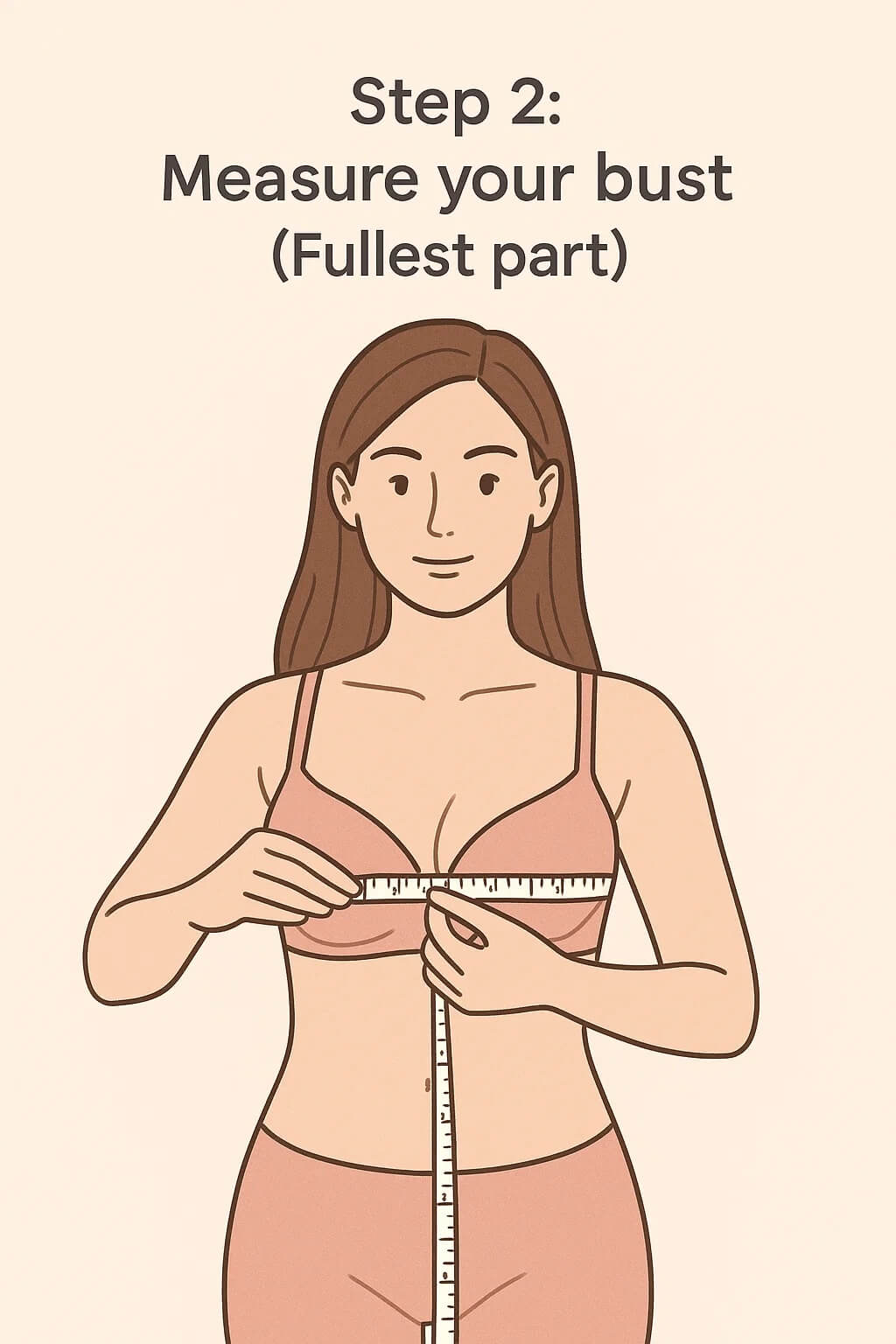
- Measure your bust. Measure around the fullest part of the bust, keeping the tape parallel to the floor and not overly tight.
- Compare the two numbers. Your underbust helps determine the band, and the difference between bust and underbust points you toward your cup size.
If your measurements put you between sizes, that is normal. Some women prefer a slightly firmer band with a softer cup, while others feel better sizing up in band and adjusting the cup using sister sizing.
You can check your result against the official VEIMIA Size Guide before choosing a style.
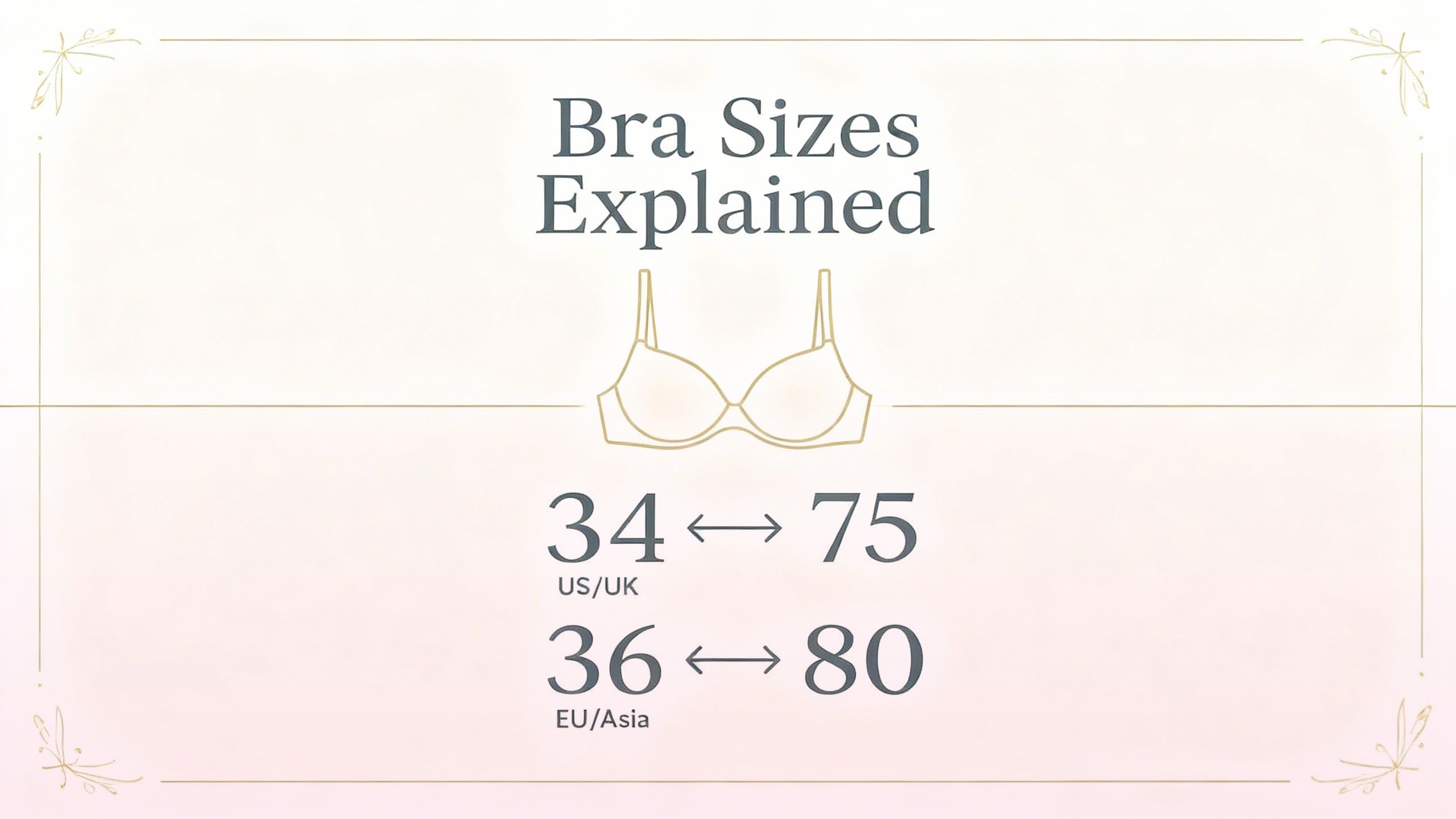
What do sizes 34, 36, 75 and 80 mean?
This is where many shoppers get confused: some brands use inch-based systems like 34 and 36, while others use centimetre-based systems like 75 and 80.
34 / 36 are commonly used in US/UK-style band sizing.
75 / 80 are commonly used in EU/Asia-style band sizing.
In many cases, 75 is close to 34, and 80 is close to 36 — but brands can still vary slightly in fit.
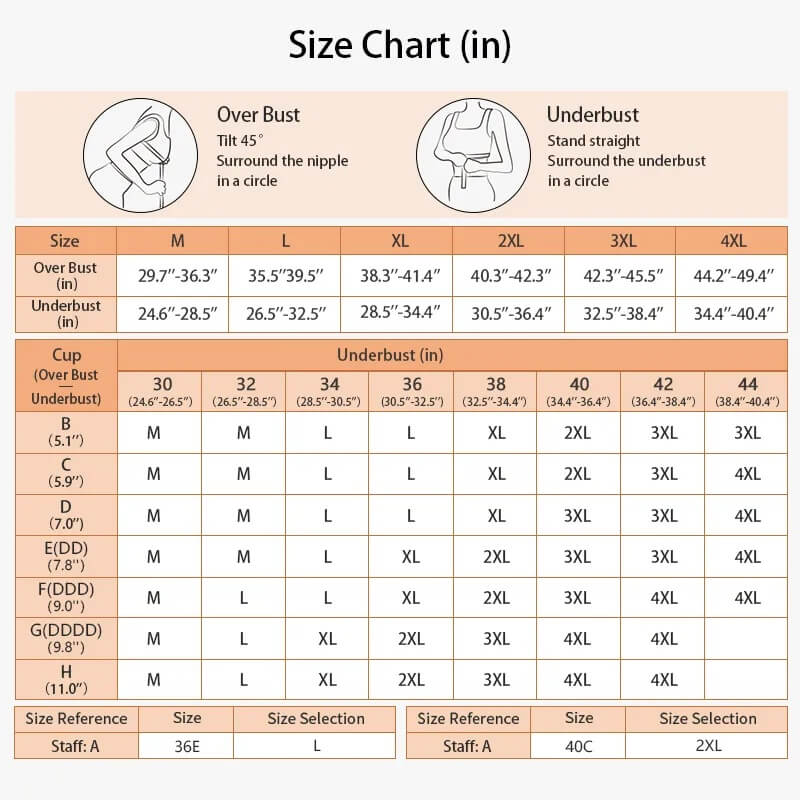
That means a shopper looking at 75B and 34B is often looking at very similar band families, but not always the exact same feel. Fabric stretch, cup depth, side support, and brand pattern all still matter.
Common size questions, explained simply
Is 75B the same as 34B?
Often close, but not guaranteed. In many conversion charts, 75B sits in the same general band family as 34B. The final feel can still change depending on brand cut and cup design.
What is a 34C equivalent to?
A 34C usually has sister sizes such as 32D or 36B. The cup volume is similar, but the band tension changes.
Are 34E and 34DD the same?
That depends on the sizing system. UK, US, and EU cup naming do not always line up directly, so it is best to compare brand charts instead of assuming the letters translate one-to-one.
Is 36 medium or large?
A 36 band is usually one step above 34 and often still sits in a medium-type range, but the overall feel depends heavily on cup size and style.
Why fit still varies even when the size looks correct
Knowing the number is only the start. The real fit depends on more than labels.
- Brand and style differences: some bands run tighter, some cups run deeper, and some styles shape more aggressively than others.
- Cup volume is relative: a D cup on one band is not the same total volume as a D cup on another.
- Sister sizes can help: if the cup feels right but the band feels off, moving to a sister size often solves the issue faster than guessing randomly.
- Body changes matter: posture, weight shifts, hormones, and daily routine can all change how a bra feels.
- Measurement errors happen: even a small tape error can change your result.
That is why it helps to match the style to the support goal. If your measured size is correct but the bra still feels wrong, the solution may be a different construction — not a totally different number.
For lighter daily wear and easy fitting
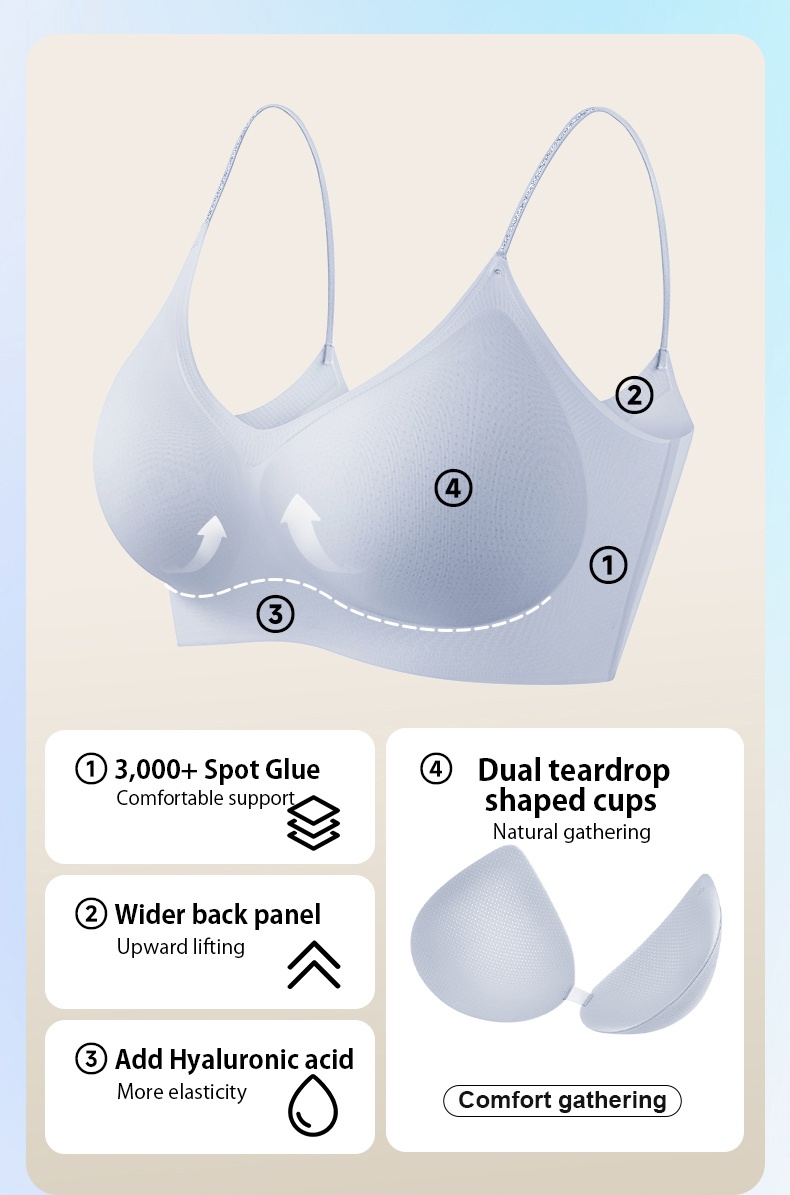
VEIMIA Cooling Seamless Bra
A strong starter style if you want a smooth, light-feeling bra while checking whether your band size feels right in real life. Especially useful under T-shirts and thinner tops.

VEIMIA Comfortable Wireless Cami Bra
A comfortable daily option if you prefer a softer, less rigid fit while still wanting coverage for work, errands, or home wear. A good pick for women easing into size correction without wanting a hard-structured bra.
For fuller support, shaping, and more secure daily fit

VEIMIA Minimizer Bra
A smart next step for 34C / 75C and fuller daily wear, especially if you want smoother contouring under blouses and more stable support than a lighter seamless bra gives.
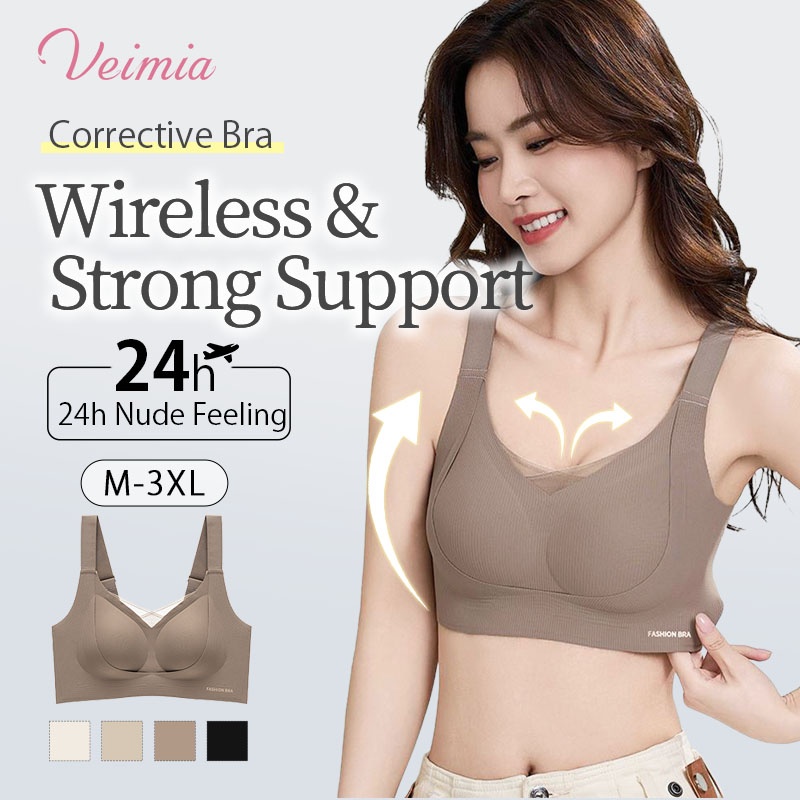
VEIMIA Corrective Anti-sagging Bra
A useful choice when your measured size feels close, but you still want more shaping help and a more secure, refined fit through the side wing and cup structure.

VEIMIA Plus Size Bra 3D Wireless Lift & Anti-sagging
A better match for broader bands and fuller daily support needs, especially if you are moving beyond light B-cup or medium support bras and want more reliable shaping for all-day wear.
Summary & actionable next steps
- Measure underbust and bust, then determine band and cup together.
- Use a conversion chart when switching between 34 / 36 and 75 / 80 systems.
- Check real fit: the band should stay level, cups should contain tissue cleanly, and straps should not carry all the weight.
- If one part fits and the other feels off, try a sister size before giving up on the style.
- Re-measure when your body, routine, or preferred bra category changes.
Wearing the correct size is not only about comfort. It changes how your clothes sit, how supported you feel, and whether a bra actually earns its place in your drawer.


