


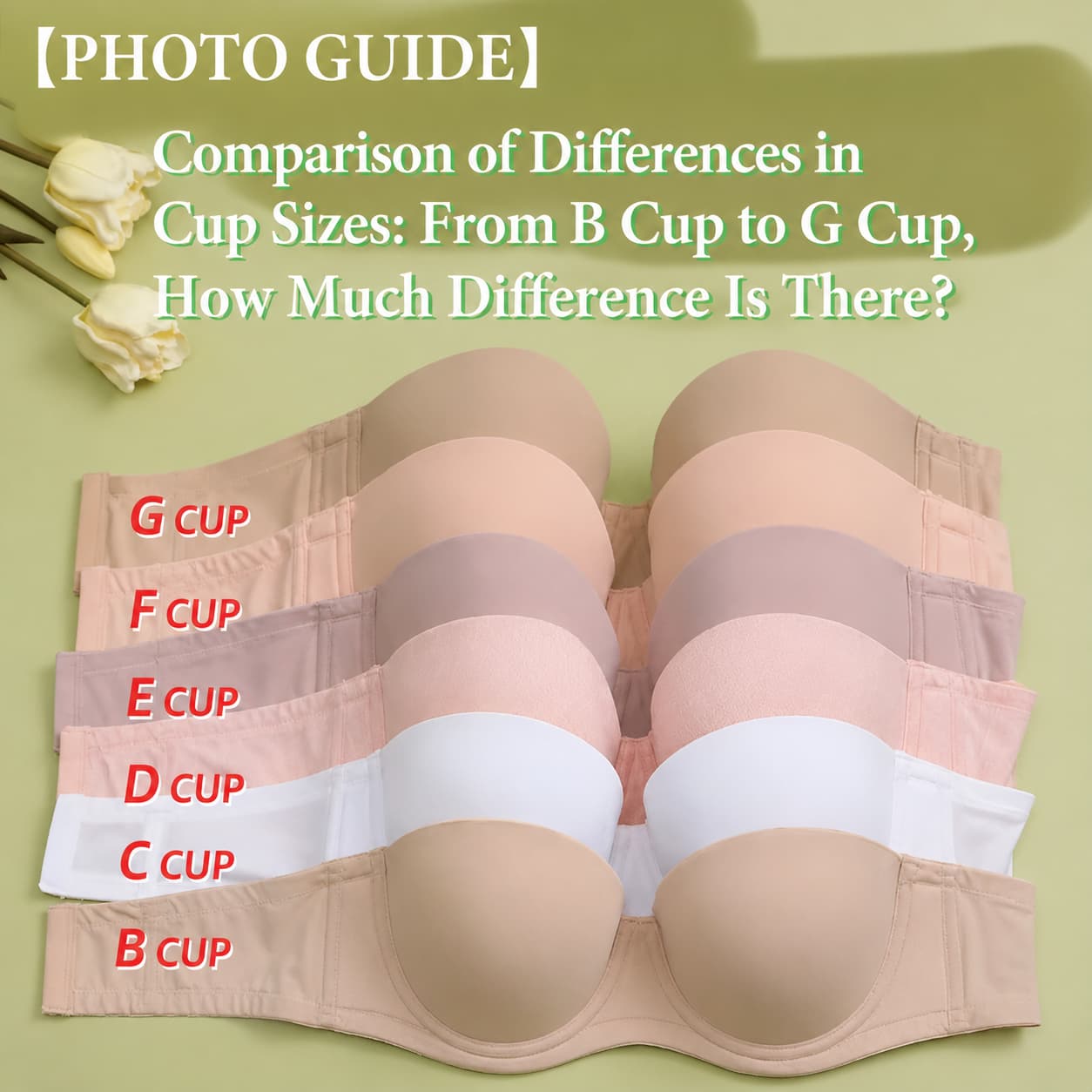
B to G Cup Sizes Compared: Measurements & Bra Fit Guide
What is the difference between a B, C, D, DD/E, F, and G cup? Cup letters describe the relationship between your bust and band measurements, but they do not represent one fixed breast size.
A 32D, 34D, and 38D all use the letter D, yet their cup volumes are different because they are built on different band sizes. Finding the right bra therefore requires you to consider both the band and the cup.
Quick answer: In a commonly used inch-based sizing reference, each additional inch between the bust and underbust measurements represents approximately one cup step. However, cup lettering is not completely standardised, especially after D cup. Always compare your measurements with the size chart of the brand you are buying.
What Does Bra Cup Size Mean?
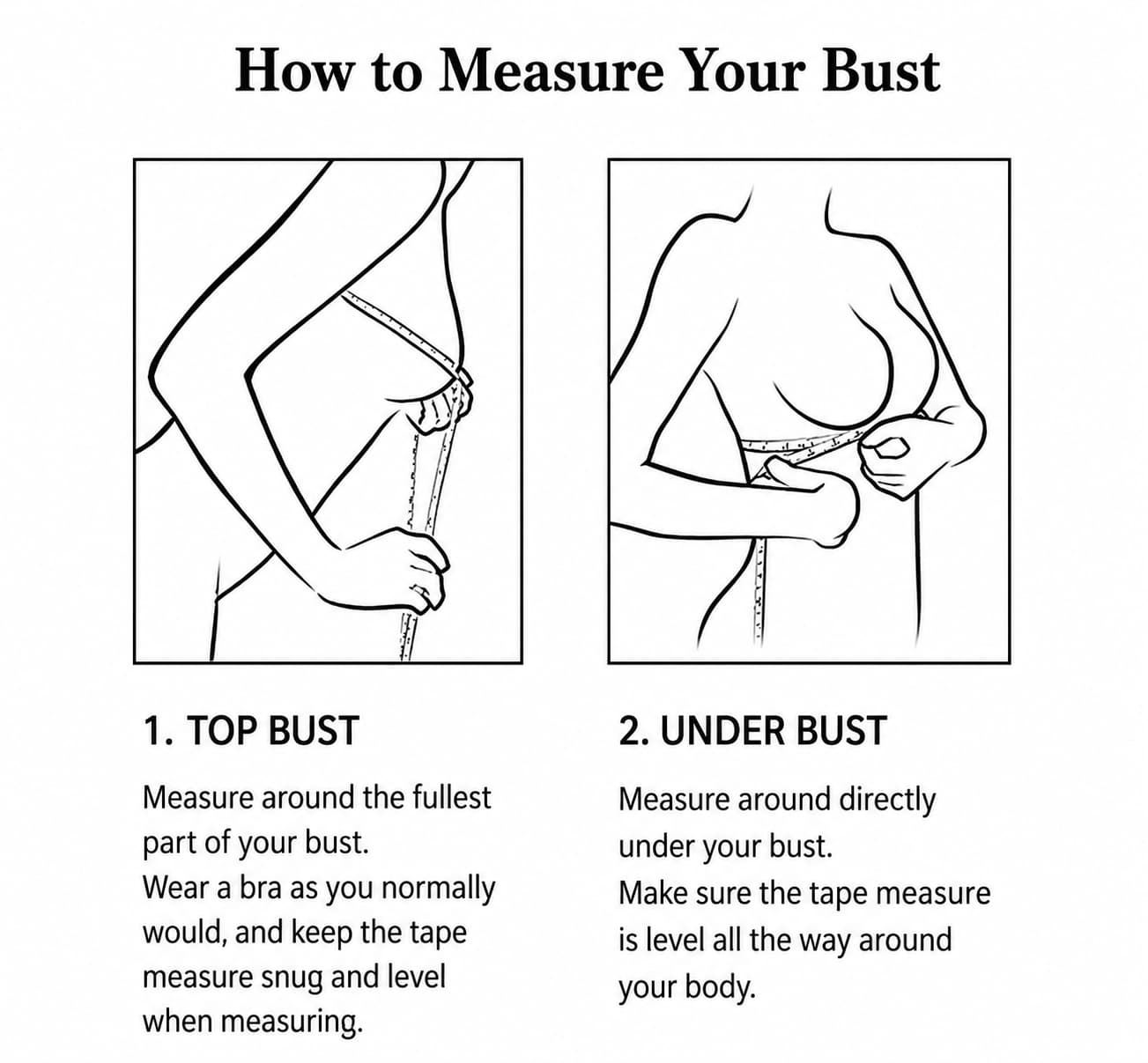
A bra size contains two parts: a number and a letter. The number is the band size, which relates to the measurement around your ribcage. The letter is the cup size, which is estimated from the difference between your full bust and underbust measurements.
For example, a bra labelled 34C has a 34 band and a C cup. The C does not describe the cup volume on its own. A C cup attached to a larger band is generally larger than a C cup attached to a smaller band.
B to G Cup Size Measurement Chart
The chart below shows a simplified one-inch-per-cup reference commonly used to explain bra cup progression. The centimetre figures are rounded, and the exact cup label may differ between brands.
| Bust Minus Underbust | Approximate Difference | Common Simplified Cup Reference |
|---|---|---|
| 2 inches | About 5 cm | B cup |
| 3 inches | About 7.5 cm | C cup |
| 4 inches | About 10 cm | D cup |
| 5 inches | About 12.5 cm | DD or E in some sizing systems |
| 6 inches | About 15 cm | F or another fuller-cup label, depending on the system |
| 7 inches | About 17.5 cm | G or another fuller-cup label, depending on the system |
This chart is an approximate fitting reference, not a universal conversion chart. Cup sequences after D vary considerably. For example, one brand may use DD, another may use E, and another may use DDD/F for a similar step. Check the individual product size chart before ordering.
Why Band Size Changes Cup Volume
Cup size is proportional to band size. This means the same cup letter becomes larger as the band size increases. A 38C generally has more cup volume than a 32C, even though both bras use the letter C.
This is also why a D cup should not automatically be described as “large.” A 30D may have a similar cup volume to a 32C or 34B, while a 40D is designed for a much larger ribcage and cup capacity.
Sister Size Examples
Sister sizes are neighbouring bra sizes with approximately similar cup volume but different band lengths.
| Tighter Band | Starting Size | Looser Band |
|---|---|---|
| 30C | 32B | 34A |
| 30D | 32C | 34B |
| 32D | 34C | 36B |
| 32DD/E | 34D | 36C |
| 34DD/E | 36D | 38C |
Sister sizing can help when the cup feels right but the band feels too tight or too loose. It does not guarantee an identical fit because cup shape, wire width, fabric stretch, and bra construction also matter.

B Cup Size: Light Support and Natural Shaping
Approximate simplified measurement: About a 2-inch or 5 cm difference between the bust and underbust.
A B cup is usually one cup step above an A cup in common sizing systems. However, its actual volume depends on the band. A 32B is smaller in volume than a 38B.
Many B-cup wearers can choose lighter bra structures, but support needs still depend on breast shape, tissue softness, movement level, and personal preference.
Helpful bra features for B cups
- Lightly lined cups for natural shaping
- Wireless designs for everyday comfort
- T-shirt bras for a smooth look under clothing
- Bralettes for low-impact daily wear
- Push-up or plunge bras when extra lift is preferred
Read more in our complete B cup size guide .

C Cup Size: Balanced Coverage and Everyday Support
Approximate simplified measurement: About a 3-inch or 7.5 cm difference between the bust and underbust.
A C cup usually represents one cup step above B in common inch-based charts. It can appear relatively small, medium, or full depending on the band size, breast shape, and body frame.
C cups often work with a wide variety of bra styles. The most important signs of a good fit are smooth cup edges, a secure band, and cups that contain the breast tissue without gaping or overflow.
Helpful bra features for C cups
- T-shirt bras with smooth molded or lightly lined cups
- Wireless bras with a stable underband
- Demi or balcony bras for an open neckline
- Side-support panels when the bust spreads outward
- Fuller coverage when additional containment is needed
See our C cup measurement and fit guide .
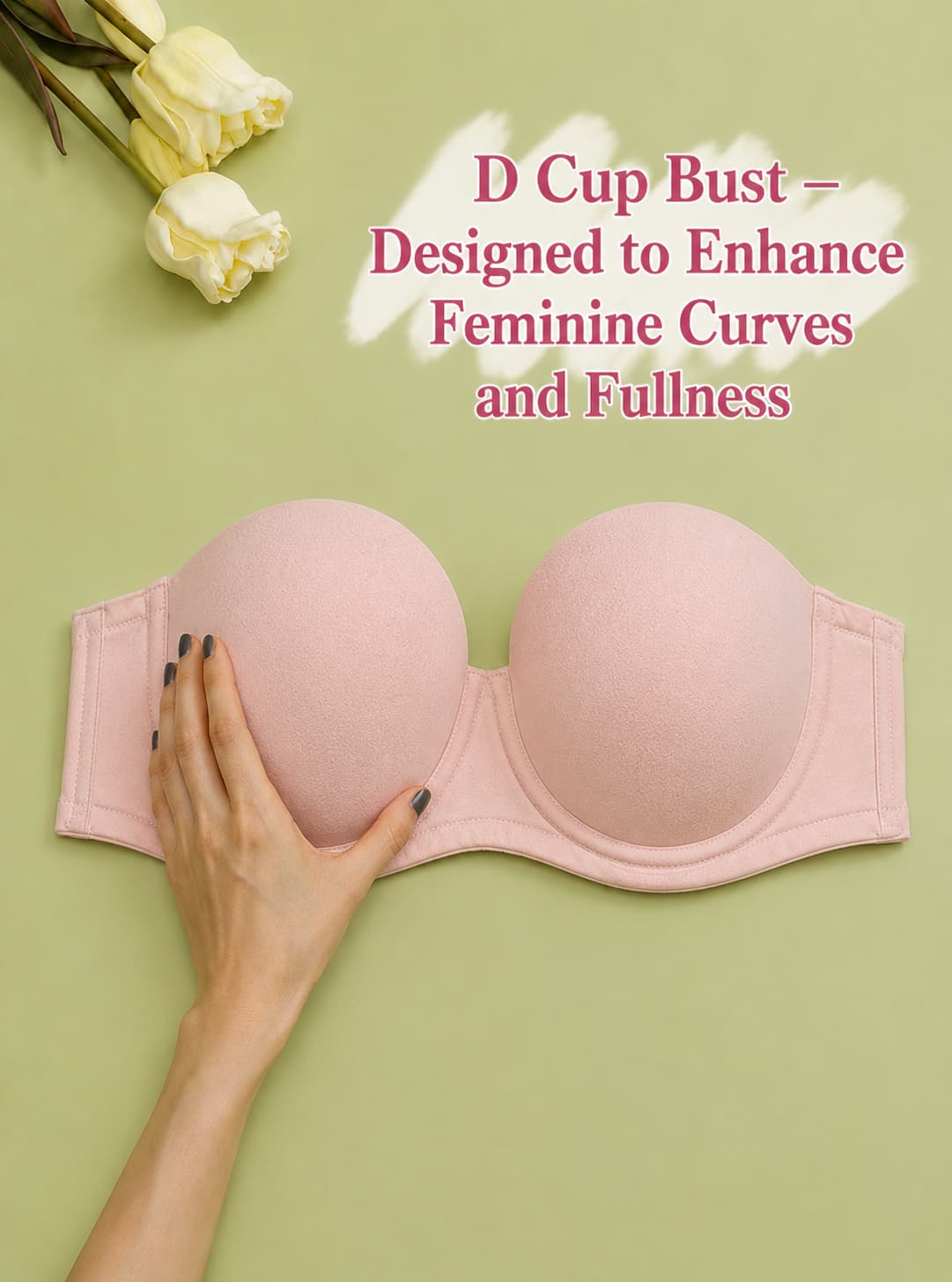
D Cup Size: Fuller Coverage with Stable Support
Approximate simplified measurement: About a 4-inch or 10 cm difference between the bust and underbust.
A D cup is one cup step above C in many sizing systems. It does not describe one fixed breast volume: 32D, 34D, and 38D are all different sizes.
D cups may benefit from more stable lift and containment, particularly when the breast tissue is soft, projected, or fuller at the sides. The band should carry most of the support rather than placing all the pressure on the shoulder straps.
Helpful bra features for D cups
- Full-coverage cups that reduce overflow
- Side-support panels that guide tissue forward
- A stable underband that stays level across the back
- Wide or adjustable straps for better pressure distribution
- Structured wireless or underwired styles, depending on preference
Learn more from our D cup size and measurement guide .
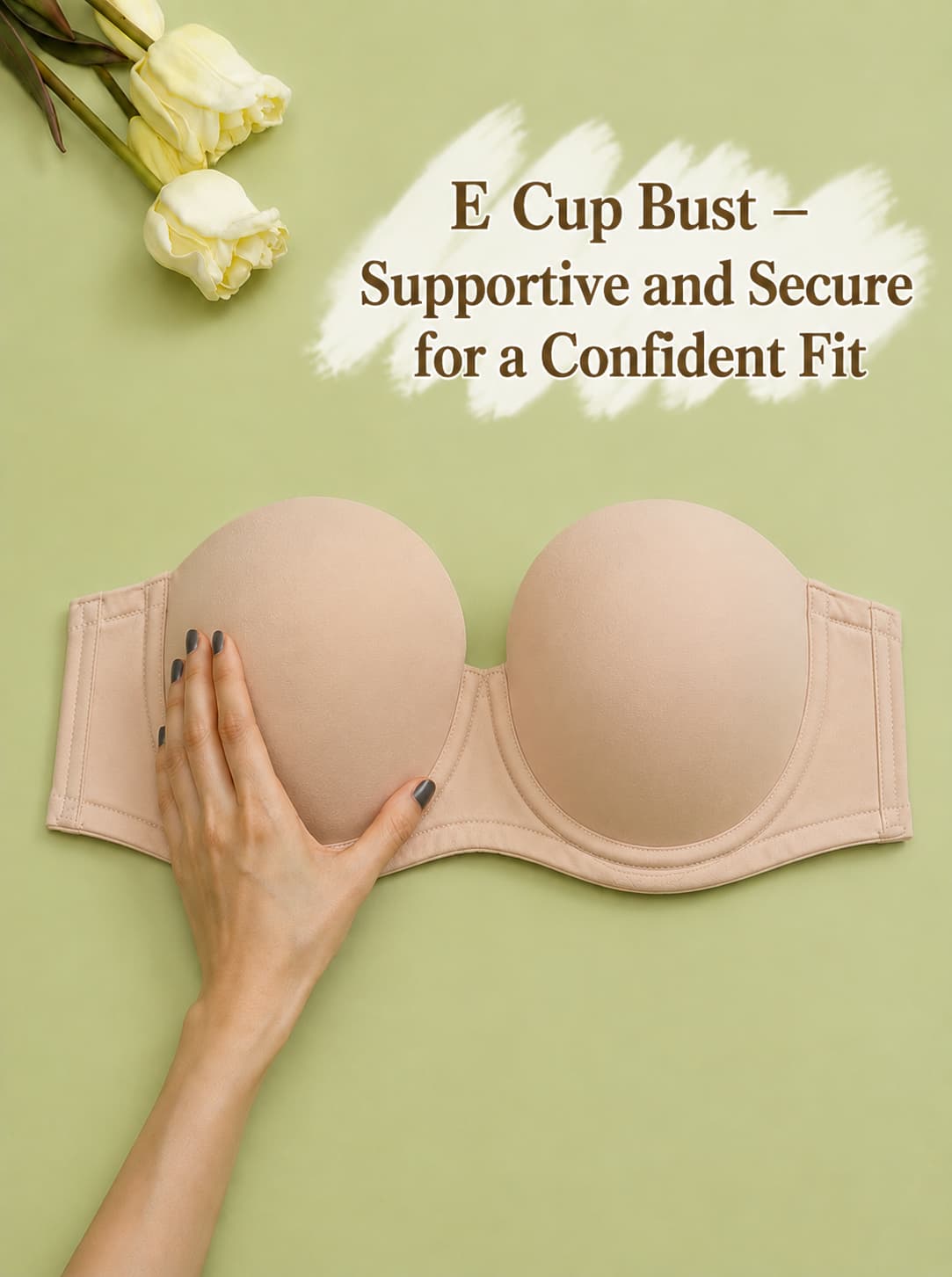
DD and E Cup Sizes: Why the Labels Can Be Confusing
Approximate simplified reference: Around a 5-inch or 12.5 cm difference may be labelled DD, E, or DD/E by some brands.
DD and E are not universally interchangeable. Some brands treat DD and E as equivalent labels, while other sizing systems place them at different points in the cup sequence.
This is why someone may fit a DD in one brand and an E or F in another without their body measurements changing. Always check the exact size chart rather than converting by cup letter alone.
Helpful bra features for DD and E cups
- Deep cups with enough room at the centre
- Full coverage to contain upper and side breast tissue
- Side-smoothing wings for a more stable fit
- A firm underband that supports from below
- Wide adjustable straps that do not carry all the weight
For more detail, visit our E cup size and bra fit guide .
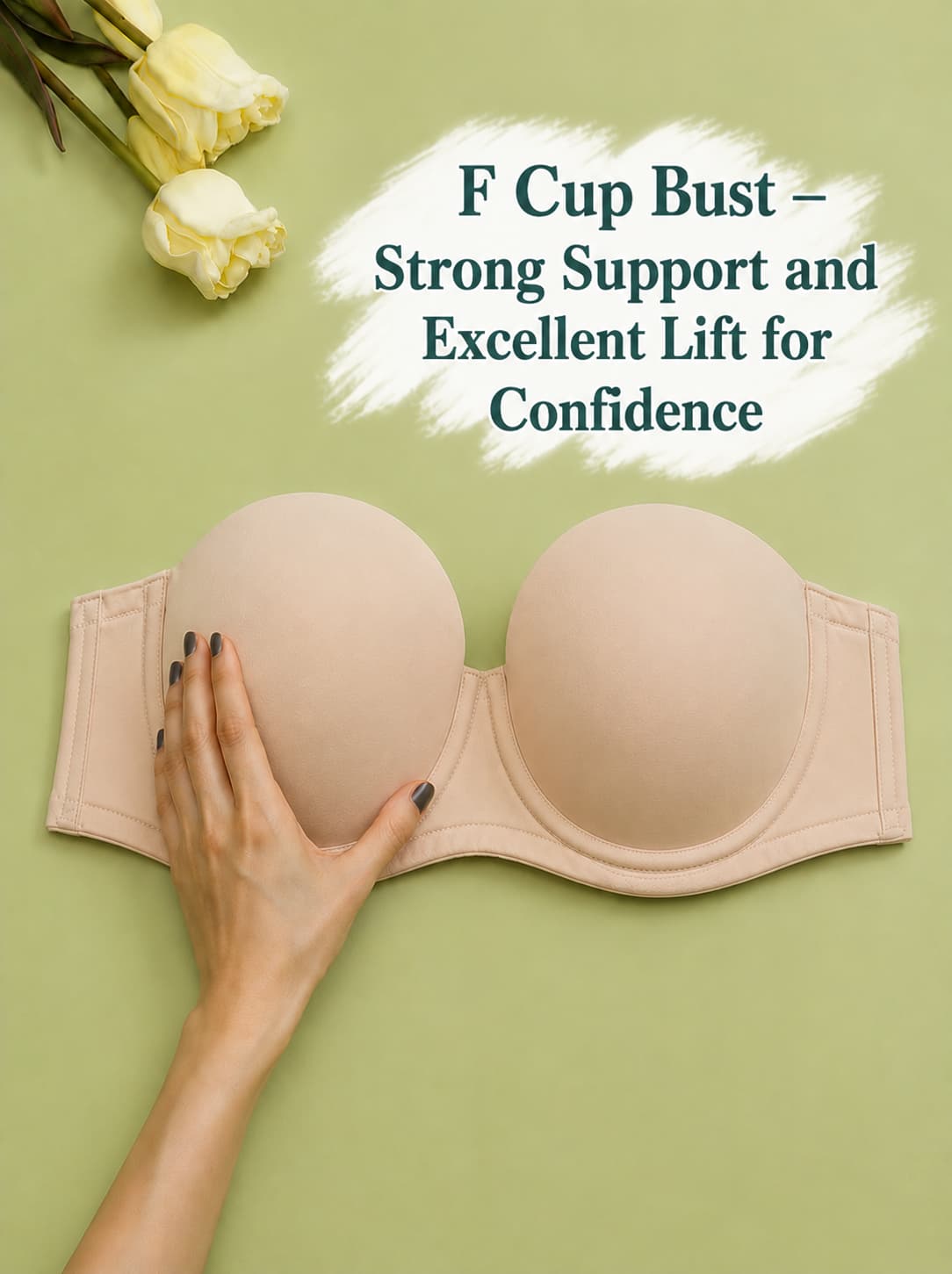
F Cup Size: Fuller-Bust Lift and Comfort
Approximate simplified reference: F is commonly used for a fuller cup, but its exact measurement position varies between US, UK, European, and brand-specific systems.
F-cup bras usually require more deliberate support construction than smaller cup sizes. However, the band remains a major part of the fit. Simply tightening the straps cannot compensate for a band that is too loose.
A well-fitting F-cup bra should lift the bust without excessive compression, contain the breast tissue at the sides, and allow comfortable movement throughout the day.
Helpful bra features for F cups
- Wide, fully adjustable shoulder straps
- A firm and supportive underband
- Multi-panel cups for shaping and lift
- Side-support sections that bring the bust forward
- Breathable materials for warm and humid weather
Explore our F cup size guide for fuller busts .

G Cup Size: Fuller-Cup Support and Secure Coverage
Approximate simplified reference: G represents a fuller cup label, but its exact position in the sizing sequence depends on the country and brand.
G-cup bras generally need deep cups, strong band support, and a secure design that controls movement without pressing the bust flat.
The best fit should keep the band level, hold all breast tissue inside the cups, and prevent the straps from digging excessively into the shoulders. Cup shape is especially important because a G cup can be shallow, projected, wide-rooted, narrow-rooted, top-full, or bottom-full.
Helpful bra features for G cups
- Deep full-cup construction
- Wide wings and a stable underband
- Reinforced side-support sections
- Wide adjustable straps with strong hardware
- High-support wireless, underwired, or minimizer options
How to Measure Your Bra Size at Home
Use a soft measuring tape and measure in front of a mirror so you can check that the tape remains level. For a more accurate starting point, wear an unpadded bra or measure without a bra.
1. Measure your underbust
Wrap the tape directly beneath your breasts and around your ribcage. Keep it level and comfortably snug without pulling it painfully tight.
2. Measure the fullest part of your bust
Place the tape around the fullest part of your bust. Keep it parallel to the floor and avoid compressing the breast tissue.
3. Calculate the difference
Subtract the underbust measurement from the full-bust measurement. Use the result as an initial cup-size reference, then compare both measurements with the brand’s official size chart.
4. Check the actual bra fit
Measurements provide a starting size, but the final fit also depends on cup depth, wire width, breast shape, fabric stretch, and the construction of the bra.
Measure two or three times and use the most consistent result. Your bra size may change after weight changes, pregnancy, breastfeeding, hormonal changes, or changes in breast tissue.
7 Signs of a Well-Fitting Bra
Signs You May Be Wearing the Wrong Bra Size
- The band rides up your back or shifts during movement.
- The straps dig in even after you adjust them.
- Breast tissue spills over the top or sides of the cups.
- There is persistent empty space or wrinkling in the cups.
- The underwire rests on breast tissue.
- The centre gore lifts far away from the chest.
- The bra causes avoidable pressure, rubbing, or discomfort.
These problems do not always mean you need a different cup size. You may need a different band size, sister size, cup depth, wire width, or bra style.
Stay Cool, Smooth & Supported
Summer Cooling Lingerie Sale from S$39
Explore lightweight cooling bras, seamless camisoles, breathable panties, and smoothing shapewear designed for humid days and comfortable daily wear.
Shop Summer Cooling SaleVEIMIA Bra Picks by Support Need
Cup size is only one part of choosing a bra. Consider your band size, breast shape, preferred coverage, clothing, and daily activity before selecting a style.
Cooling Bra No.1
Light, seamless comfort for everyday outfits and warm weather.
Now: S$39.00
Shop Bra
Wide U-back Bra
A wide-back design for smoother lines and more stable support.
Now: S$39.00
Shop Bra
Invisible Essentials
A smooth and secure option for fitted clothing and fuller coverage.
Now: S$39.00
Shop BraBest Bra Types by Cup Size
B and C cups may feel comfortable in lightly lined, wireless, bralette, demi, or T-shirt styles. The best option depends on how much shaping and coverage you prefer.
D, DD/E, F, and G cups often benefit from fuller coverage, a stable band, side-support panels, wider straps, and deeper cups. Minimizer bras can also help create a smoother silhouette when that is the desired effect.
These are general starting points rather than strict rules. A person with a smaller cup letter may still need strong support, while someone with a fuller cup may prefer a lightweight design that has been properly engineered for their size.
FAQ About B to G Cup Sizes
Is a D cup considered large?
Not necessarily. D describes the difference between the bust and band, not one fixed breast volume. A 30D has less cup volume than a 40D and may look quite different on the body.
Is DD the same as an E cup?
Sometimes, but not always. Some brands use DD and E for a similar cup step, while other sizing systems treat them as separate sizes. Use the brand’s own size chart before ordering.
Does an F cup always equal a 6-inch difference?
No. A 6-inch difference may correspond to F in some simplified or US-style charts, but F appears at a different point in other sizing systems. The cup letter alone is not enough for an exact conversion.
Why does my bra size change between brands?
Bra sizing is not completely standardised. Cup depth, wire width, band stretch, padding, fabric, and each brand’s fit model can all affect the size that fits you best.
Can two cup sizes have similar volume?
Yes. Sister sizes combine a smaller band with a larger cup, or a larger band with a smaller cup, to provide approximately similar cup volume. For example, 32D, 34C, and 36B are common sister-size examples.
How often should I measure my bra size?
Measuring every 6 to 12 months is a helpful general guideline. Measure again after noticeable weight changes, pregnancy, breastfeeding, hormonal changes, or whenever your current bras stop fitting properly.
Final Thoughts
B, C, D, DD/E, F, and G are not fixed descriptions of how large a person’s breasts look. Each cup letter works together with a band size, and the lettering sequence can change between sizing systems.
Start with accurate bust and underbust measurements, check the individual brand size chart, and then assess how the bra fits on your body. The right bra should feel secure, contain the breast tissue, support from the band, and remain comfortable during normal daily movement.